
The Creation
About Lou & the creation
of The Inside War
You are entering a crime scene. I am the detective. I need collaborators. But I am not presenting myself as the final authority. I am a starting point.
The Inside War is a process in motion. What follows is the story of how I arrived here, why I could not let go, and how an obsession with one album eventually became an investigative lens capable of crossing artists, genres, religions, politics and history.
I am not asking you to accept my conclusions. I am opening the case file.
One
I sold opinions
My name is Lou Haeick. Many people know me as Louie Diamond. Inside this investigation, another name eventually emerged: Lou the Cipher.
I come from a Buffalo family of old-school bookmakers. I was not a bookmaker. I knew bookmakers. I sold opinions.
I started working phones at sixteen. In 1986, at nineteen years old and fresh out of college, I moved to Las Vegas. My cousin Jack owned a telemarketing room, and in 1987 he gave me access to an office and telephones.
If they provided the Glengarrys, I provided the Benjamins.
That work taught me how persuasion is built, how confidence is manufactured, how a story is sold, and how belief can be produced on demand. It also taught me that the person selling the opinion is rarely the person who owns it.
The ledger remembers.
Two
The night possibility changed
In Las Vegas I saw something I have never been able to explain.
There was a sound like a turbine. A disc rotating. An aperture opening in the sky, and then closing. The craft reversed direction and vanished through the closing aperture. The pressure snapped the flags.
“Wormhole” is my interpretation of an observation I still cannot explain. I am not presenting it as a documented finding. I am telling you what I saw and what it did to my sense of what was possible.
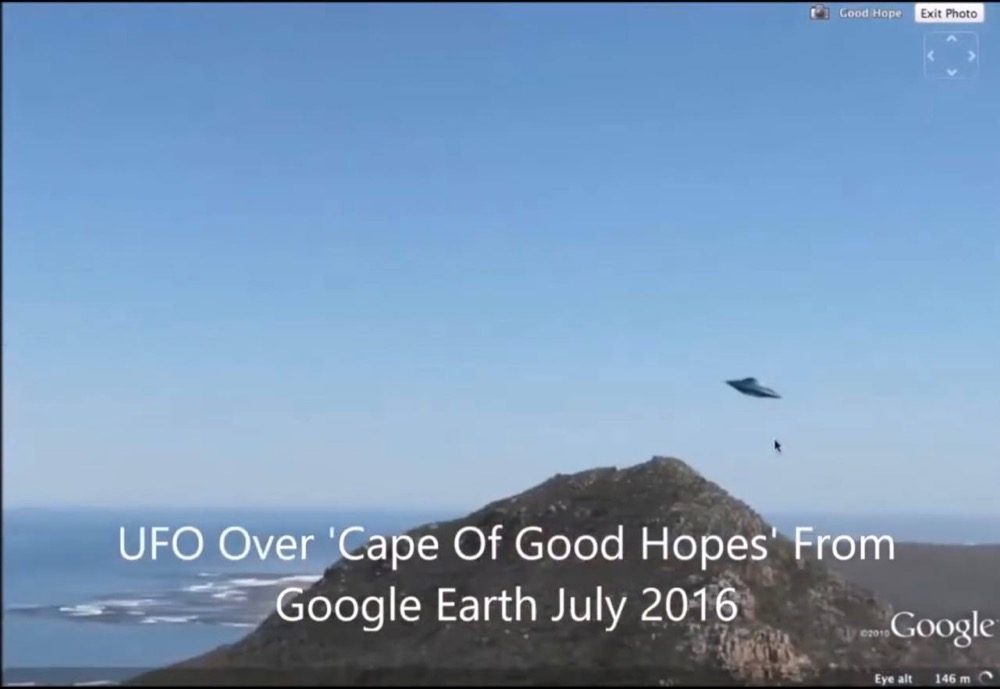
I am aware of how that reads. I include it because it changed the size of the questions I was willing to ask, and because leaving it out would make my reasoning look tidier than it was.
Three
The image I could not erase
I listened to Genesis constantly. Supper’s Ready played while I slept. But The Lamb Lies Down on Broadway became the image I could not erase.
The story begins in Manhattan. A dark mass overtakes New York. Rael becomes immobilized and is pulled into a constructed underground world of cages, corridors, altered bodies, controlled movement and lifeless packaging.
Years later, when the towers fell on September 11, the imagery inside The Lamb looked horrifyingly familiar to me.
That does not prove Genesis predicted 9/11. It does not prove the band intended to disclose a future event. It explains why I could not stop looking.
What had once felt like surreal art now appeared to contain the shape of something history had not yet revealed.
That was when my simulation question began. Not necessarily a computer simulation in the science-fiction sense. I began asking whether the reality we experience could be mediated, recorded, anticipated or directed by systems operating outside our normal field of vision.
Was the album describing a private psychological journey? A spiritual transformation? A future technological environment? Or had I begun connecting images that did not belong together?
All possibilities remained open.
Four
How did a song from 1974 qualify as a lead?
One lyric proves almost nothing. One image can be coincidence. One word can be stretched. One resemblance can be manufactured by the person determined to find it.
A pattern must earn significance.
The Light Dies Down on Broadway earned my attention because it presented a cluster of coordinates.
- New York
- Underground passage
- Water
- RED anger
- A threatened tomorrow
- An unidentified operator
- Uncertain reality
Rael is beneath the surface. A window in the bank opens above him. New York and the subway return. Anger is carved into a “blood-red band.” Tomorrow is threatened by an “unknown hand.” An apparent exit may lead only into another manufactured dream.
Any one of those coordinates could mean nothing. Together, they became a lead.
Five
The Radioactive file
In January 2014, I publicly predicted a nuclear false-flag event connected to Super Bowl XLVIII and New York. I believed the catastrophic Genesis file was converging on a literal event.
At the same time, Imagine Dragons’ Radioactive had become one of the biggest rock songs in America. Its video featured Lou Diamond Phillips as the ruler of an underground fighting arena. He wore the key controlling access to the imprisoned musicians. I read his character as Lucifer holding the key.
That was my interpretation, not a documented statement of artistic intent.
But then the name landed: Lou Diamond Phillips.
At the Grammy Awards, Imagine Dragons performed Radioactive while a cityscape disappeared into red light, smoke, paint and violent color. To me, the performance looked like New York being consumed by a nuclear event.
One week later, Super Bowl XLVIII took place just outside New York. Bruno Mars headlined the halftime show. The Red Hot Chili Peppers joined him.
Red Hot. Mars. Radioactive. “Welcome to the new age.”
I believed I was watching a countdown.
Then nothing happened. There was no nuclear attack. My prediction failed. I was wrong.
That failure belongs permanently in the case file. It will not be hidden, softened or rearranged to make my investigation appear stronger.
The ledger remembers.
Six
Why I could not let go
I could not let go because the imagery did not disappear when the predicted event failed. It expanded.
I had assumed I was seeing the end of something — a closing explosion, a final false flag. Looking backward, I began wondering whether I had mistaken the starting gun for the finish line.
Seven
Rush changed the method
The Genesis investigation was assembled in pieces. I followed The Lamb, Supper’s Ready, Dodo/Lurker, The Light, the watchers, the floods, the towers and the unknown hands. I saw connections, but I did not yet have a disciplined method for testing them.
Years later, Rush changed that.
Rush taught me to stop rearranging the evidence around the conclusion and follow the release chronology.
Album by album. Song by song. Artifact by artifact. Chronology turned a collection of impressions into an investigation that could be challenged. A development that appeared in the proper sequence carried more weight than a pattern assembled from handpicked fragments.
I then returned to Genesis and applied the same discipline. Some connections strengthened. Others weakened. Both results mattered.
That was the creation of The Inside War Lens.
Eight
What is the Inside War Lens?
The IWL is an interpretive method for investigating recurring operations across music, artwork, film, religion, politics and history.
It does not begin by declaring that artists secretly coordinated with one another. It does not treat every resemblance as prophecy. It does not assume that my interpretation equals documented artistic intent.
The method begins with the artifact. What was released? When was it released? Who created it? What was happening historically? What explanation did the artist provide?
Only after establishing that record does the IWL ask its own questions:
- Who is speaking?
- Who is watching?
- Whose hand is operating?
- Who benefits?
- Who is being recruited?
- What is being exchanged?
- What repeats?
- What changes when everything is placed in chronological order?
The IWL separates documented history, observable recurrence, creator explanation, personal interpretation and fictional extension. Those categories may interact, but they cannot be silently blended into one class of evidence.
Unknown is an acceptable result.
One occurrence may be coincidence. Repeated observation is what earns attention.
The invitation
Question everything, including me
I need collaborators who will produce missing artifacts, challenge classifications and help tighten the IWL itself.
If a connection cannot survive examination, remove it. If the lens is too wide, narrow it. If a definition is weak, strengthen it. If another interpretation explains the evidence better, make the case.
The community will not vote something into truth. The evidence must carry it there.
The Inside War is not a monument built to protect my theory. It is an instrument being developed — and useful instruments become more precise through testing, correction and better eyes.
I am a starting point. This is a process in motion.
Enter the crime scene. Leave the labels outside. Question everything, including me, and help tighten the lens until it reveals only what the evidence can support.
The case is open.